
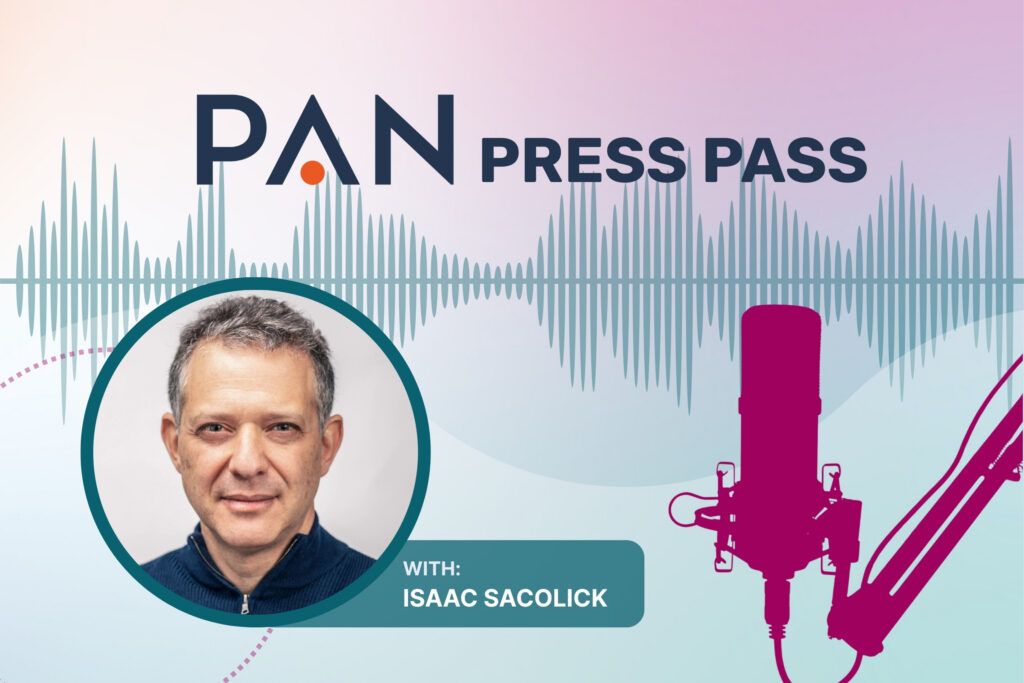
We caught up with Isaac Sacolick, president of StarCIO and longtime contributor to CIO and InfoWorld, to talk about where his ideas come from, how he sees AI reshaping journalism, and what separates a standout quote from the hundreds he reviews every quarter.
Isaac’s background gives him range: He has served as a CIO and CTO, shifted into analyst and editorial roles, and built a career centered on helping leaders navigate technology change. That mix gives him a grounded, practical point of view — one shaped by firsthand experience and a deep understanding of what CIOs actually care about.
Related Read >> PAN Press Pass: Dom Nicastro, Editor-in-Chief of CMSWire
Q: Where do your strongest article ideas come from?
Isaac says ideas rarely come from sitting down to brainstorm. They come from being out in the industry and paying attention.
“I am out in the industry with my ears open all the time. Someone will say just one sentence and I will be like, oh, I should write something about that.”
Conferences, client conversations, side comments in meetings, and questions people ask in passing all tend to spark something. His weekly LinkedIn Coffee With Digital Trailblazers Hour has become an unexpected source too — even when the topic is predefined, audience reactions reveal what’s top of mind for leaders.
For Isaac, it’s not about chasing the trend cycle. It’s about noticing the things others haven’t articulated yet and asking whether CIOs — or future CIOs — would find value in the answer.
Q: What topics have dominated your writing this year? What’s next?
When Isaac looks back on what he’s published this year, one theme clearly stands out.
“When I go tally up my content from this year, I am guessing at least 40 percent to 60 percent was AI. Some semblance of AI.”
He has written about AI through the lens of agile practices, DevOps, security, HR, and more. Looking ahead, he expects to spend more time on:
- AI’s impact on marketing and customer experience
- AI literacy across organizations
- Best practices for developer teams building agent-based systems
In his view, AI hasn’t fully landed in customer-facing experiences yet — but that shift is coming.
Related Read >> AI & SEO: Adapting Your Search Strategies for Google AI Overviews
Q: How does your CIO background shape your writing today?
“I do reporting, and I am a journalist, but I am more of an analyst and an ex-CIO.”
Everything Isaac writes is filtered through a simple lens: What matters to leaders who are responsible for budgets, teams, and strategic direction?
He’s also practical about how AI is reshaping publishing. People are reading fewer full articles and relying more on answer engines for quick information.
“People are reading less. They are asking ChatGPT and everybody else for the answers. And then they go off, okay, got my answer, that is it.”
His approach: offer something AI summaries can’t replicate — experience, context, and a clear point of view. He uses AI tools for tactical support (like refining a headline), not for generating ideas or structure.
Q: What does your own reading routine look like?
Isaac reads between 24 and 30 books per year, and most aren’t technology books. He gravitates toward:
- Marketing
- Leadership
- Decision-making
- Stories about how organizations work
He also checks a few trusted publications regularly and spends one to two hours a day on LinkedIn — not for vanity metrics, but to understand what his network is wrestling with. He values original reading over secondhand summaries because nuance sparks better ideas.
Q: For PR teams, what makes a quote genuinely valuable?
Isaac reviews hundreds of contributed quotes every quarter. He sees clear patterns in what works — and what doesn’t.
“A lot of them are plain vanilla. And I tell people, the quotes that I include taught me something I did not know.”
What makes a quote standout:
- It teaches him something new.
- It’s grounded in real expertise.
- It moves the narrative forward.
- It’s written by a voice that matches the audience (e.g., CIO-level content needs CIO-level perspectives).
What makes a quote unusable:
- Long, unedited blocks
- Generic observations
- Promotional or product-driven messaging
- Stats without clear sourcing
If it doesn’t add texture or clarity, it won’t earn space.
Q: What types of events feel most valuable to you?
Isaac prefers midsize events — big enough for energy and perspective, small enough for depth.
His favorite events offer:
- Opportunities to ask real questions during press sessions
- One-on-one conversations that go deeper than standard briefings
- Direct access to customers using the technology
- Sessions where executives speak beyond pre-drafted talking points
He also values events that connect him directly with C-level buyers and emerging leaders stepping into those roles.
Q: How do you see AI affecting journalism more broadly?
Isaac sees two major pressures shaping the future of journalism:
- Fragmented attention. Readers are increasingly going to AI tools for fast answers instead of full articles.
- The rising importance of voice and differentiation. With so much synthesized content available instantly, readers need a reason to seek out a specific writer.
“The level that AI has brought up to around your average writer has brought them up to a point where there is a ton of content out there that anybody can click and read on. So my only differentiator is what I write about and that I am the one writing about it from the lens of the CIO.”
His focus is creating content that endures — not content designed purely for quick clicks.
Related Read >> The New Definition of “Top-Tier” Media
Q: Any final advice for PR teams navigating today’s media environment?
Isaac believes PR teams are strongest when they help clients think beyond coverage.
“I would say the value of reaching targeted audiences. That is the value of your brand. Yes, being in the press is a big part of reaching C-level audiences and technology buyers.”
For companies selling complex or high-value technology, generic press visibility isn’t enough. He encourages PR teams to:
- Emphasize executive visibility
- Build strong points of view
- Focus on audience connection
- Think about how content reaches the buyers who matter most
Coverage is a tactic. Audience connection is the strategy.
The Takeaway: Insight Still Matters
Our conversation with Isaac reinforced a truth that matters for every emerging tech brand. AI may increase the volume of content, but it can’t replicate experience, context, or the unique angles that come from people who have felt the weight of real decisions.
Whether he’s advising CIOs, writing a column, or reviewing contributed quotes, Isaac looks for the same thing: a perspective that helps leaders understand something new.
At PAN, we share that belief. We help B2B tech and healthcare brands stand out by elevating the people and ideas shaping their industries. If you’re rethinking your media strategy or want to connect more meaningfully with the audiences who matter most, our team can help you get there.