
Cybersecurity Awareness Month is about risk. So, B2B cybersecurity marketers, let’s talk about one risk you may be overlooking: Your AI messaging might be missing the mark.
AI storytelling in cybersecurity has changed quickly. Almost four years out from the launch of ChatGPT, every company has raced to find their niche in one of the loudest news cycles we’ve seen yet. The result is a heavily saturated media and marketing landscape with a lot of AI security stories that sound very similar.
So, how do you make yours stand out? Answer three questions honestly: whether AI is core to your story, whether you’re showing real actions or outcomes, and whether you’re adding a perspective no one else has.
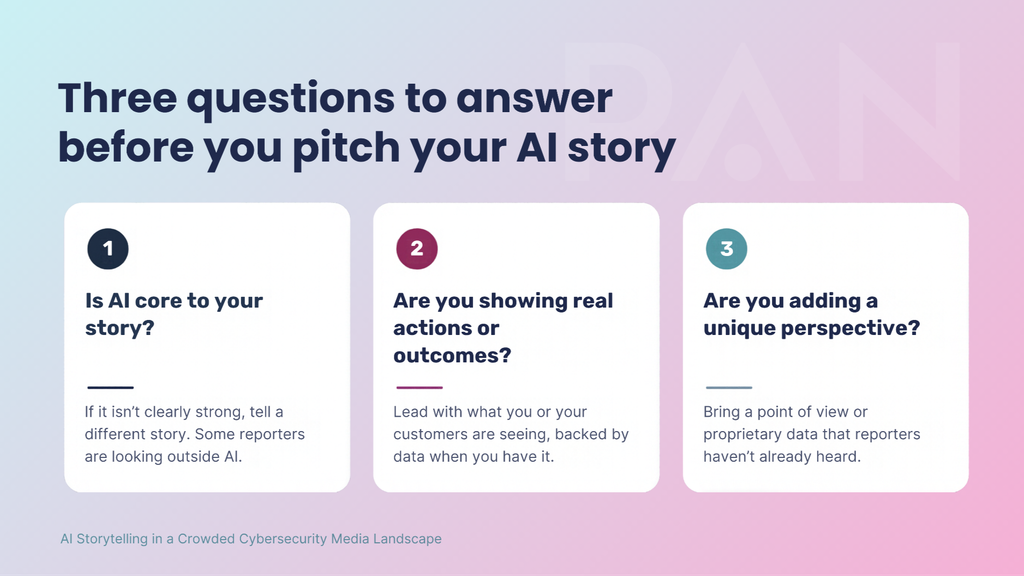
If you want to know how to differentiate an AI security story, ask yourself those three questions in order. Let’s start with the hardest one.
1. Is AI Core to Your Story?
LinkedIn was flooded with posts this year that Black Hat 2026 offered a strong “sameness.” Everyone was trying to prove they are the smartest and most advanced AI-first cybersecurity company.
Here’s the moment where B2B cybersecurity marketers need to be honest with themselves. When 400+ cybersecurity companies at one conference are all claiming an AI crown for themselves in some way or another, is AI the right differentiator for your market story?
This might take some soul-searching and a hard conversation with company leaders who want to ride the AI hype cycle. But here’s an important consideration from a media perspective: Some reporters want to hear stories that aren’t focused on AI. In a recent coffee chat with PAN, Isabelle Bousquette at the Wall Street Journal told us that she’s interested in stories outside the AI buzz. And IT Pro is looking outside AI, too:
“We are absolutely saturated with AI pitches, which is understandable but also we do need some variety on the show and other things are happening! If you have a CTO, CIO or similar – especially if they’re not at a vendor – who can talk about things other than AI that are directly relevant to an IT decision maker audience, then please get in touch.” — Jane McCallion, IT Pro
If your AI story isn’t clearly strong, tell a different story altogether.
2. Are You Showing Real Actions or Outcomes?
The biggest shift we’ve seen in 2026 is the move from AI experimentation to AI production. What does that mean for storytelling? Your audience isn’t interested in the hypotheticals anymore. Now they want to see the reality of implementation. Reporters are reflecting this desire:
“I am looking for end-users with direct experience to discuss how they address these issues, not third-party views on how others deal with these topics.” — Joao-Pierre Ruth, InformationWeek
Talking about general industry best practices or high-level trends isn’t going to cut it, which means you need to be willing to talk about what you or your customers are actually seeing as a result of AI. This could be outcomes, positive or negative. What returns are they seeing due to AI implementations in the SOC? Are new AI-powered risks emerging? What actions have you or your customers taken in response to AI threats?
It’s even better if you have data to back it up. Narratives around tangible, measurable change in security outcomes move the needle from a storytelling perspective much better than a B2B cybersecurity marketing strategy with general platitudes and musings about the industry as a whole.
3. Are You Adding a Unique Perspective?
The cybersecurity landscape is already crowded, and the AI-specific stories within it are one of the most saturated channels. For PR professionals, this may feel like a “no duh” moment, but sometimes this idea can get lost in broader marketing efforts: making sure you’re adding something new to the conversation.
AI has been discussed ad nauseam in the cybersecurity industry, from the risks, to the gains, to every governance consideration in between. Reporters have heard most high-level thoughts on AI in cybersecurity, multiple times over, in their flooded inboxes. Your customers and prospects have probably already read about it, too.
If AI is core to your brand story, you need a unique point of view or experience for your storytelling to resonate. Ideally this would be supported by a real-world outcome or proprietary data — as mentioned above — that you have from your or a customer’s AI implementation.
The good news is that AI is advancing and evolving at rapid rates. If there were ever a topic that can lend itself to fresh storylines, it’s this one.
Establishing Meaningful Marketing Messaging
We’re several years into the AI and cybersecurity news cycle, and it shows no sign of slowing. There’s an opportunity to join that conversation, but it means stepping back and evaluating what your story brings to the table before activating far and wide.
Want to know the other hard-hitting questions a good partner will ask you? Talk with PAN’s cybersecurity marketing team.