
Today, nearly every company — whether a SaaS firm, CPG brand, or healthcare organization — claims to have an AI story. For communications teams, the challenge is not simply developing that narrative but earning attention for it, as the AI media relations landscape becomes increasingly crowded, raising the bar for what reporters consider newsworthy.
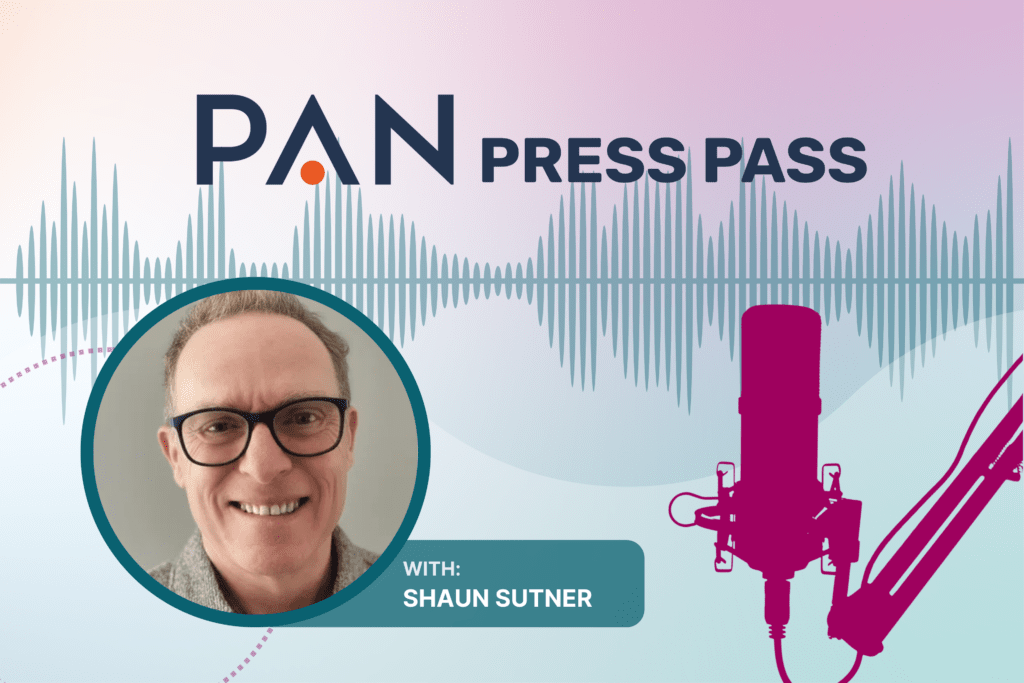
In the latest edition of PAN Press Pass, we spoke with Shaun Sutner, Senior News Director at AI Business, about how the publication decides what AI news is worth covering, what truly qualifies as an “AI company,” and what PR professionals can do to break through the noise.
From the importance of real customer stories to the pitfalls of generic pitches, here’s what communicators should know.
Q: With so many AI announcements hitting your inbox, what makes one worth covering?
AI news moves fast, and reporters are inundated with pitches daily. As a result, the bar for coverage is high.
According to Shaun, the most important differentiator is substance over hype. Partnership announcements are a prime example. He gets a constant influx of partnership pitches, but oftentimes, they fall short of being truly newsworthy.
“Partnerships is an overused word,” said Shaun. “When I see these pitches come through, I look at them skeptically. Oftentimes, these announcements don’t have anything new.”
For a partnership to feel like real news, there needs to be clear substance behind it, often in the form of meaningful investment, integration, or measurable impact.
The One Thing Reporters Want Most: Customers
One theme came up repeatedly during our conversation: reporters want to hear directly from customers. Simply put, customer stories provide the independent validation journalists rely on when assessing whether technology truly works in practice. “We love customers. That’s what we really want to see,” Shaun said.
Too often, PR pros take ‘no’ for an answer when they ask clients for customers. But without those voices, many stories lose credibility, and AI announcements feel incomplete.
A company’s claims about its technology may be compelling, but real customer experiences provide the credibility reporters need to confirm those claims.
For PR teams pitching AI innovation, customer proof points can often determine whether a story moves forward.
Q: What actually defines an “AI company”? What makes a company stand out to you?
Not every organization using AI qualifies as an AI company. AI Business specifically is focused on companies that build AI, not those who simply apply it. As Shaun put it, “We cover the developers and makers of AI, not those who lease it out.”
That distinction means many well-known enterprise software companies don’t fall into their coverage scope. Instead, AI Business is interested in companies creating AI-native applications and infrastructure, whether they are building models, tooling, or orchestration platforms. Companies such as Canva and Cursor illustrate the type of AI-native innovation that attracts editorial attention.
When it comes to startups, the expectations are even higher. AI Business wants startups that stand out in meaningful ways, which can mean anything from:
- Significant funding: Typically, $200M or more (and that number keeps rising, sometimes approaching $1B)
- Exceptional founding pedigree: leaders coming from companies like Google, OpenAI, DeepMind, or Meta
- Strong investors
- Technology with actual transformational potential
These factors help reporters identify companies likely to shape the next wave of AI innovation.
Q: Where does AI Business find story ideas?
While pitches are still important, Shaun and his team source their stories from multiple places, such as:
- Briefings with spokespeople
- Major vendor blogs
- Industry news cycles
- Conferences and events
The team at AI Business does thorough news scans at the beginning, middle, and end of the day to see what developments are top of mind and to track emerging trends. PR teams should follow a similar cadence.
In addition to monitoring news cycles, reviewing leading AI vendor blogs can help identify emerging stories before they gain widespread attention.
Q: What areas of AI are currently undercovered?
Despite the rapid growth of AI coverage, there are still several areas where companies can occupy whitespace in media conversations.
One emerging area of interest for Shaun is personal AI agents.
He shared, “Millions of people are building personal agents now,” and with this, a divide is emerging between personal agents and business-focused agents, creating new angles for coverage. Interest in this category is expanding quickly, particularly as tools such as OpenClaw gain traction.
Other underexplored areas include:
- AI and visual media
- AI-generated image and video technologies
- The intersection of blockchain and AI
These talk tracks offer new storytelling opportunities for companies seeking to differentiate their AI narratives and stand out amongst the crowd.
After we covered the ins and outs of AI media strategy, as a PR pro who is always curious about what I can be doing better, I also wanted to get Shaun’s perspective on how PR professionals can collaborate with reporters more effectively.
Q: What is a PR habit you wish would disappear? And what makes a PR pro someone you’d want to work with again?
There are a few common PR practices that immediately turn reporters off. The biggest offender: generic blast emails.
If generic blast emails are still part of your PR strategy in 2026, it may be time to reconsider. But don’t take it from me. Shaun said it plainly – “I hate blast emails. There’s no tailoring to our audience or style, and no indication they’ve read what we cover.”
Instead, reporters appreciate when PR professionals demonstrate familiarity with the outlet. Simple things help:
- Mentioning why the story fits their coverage
- Referencing past articles
- Showing you understand their editorial focus
A strong pitch also begins with a compelling subject line. “Make it punchy – like a headline that draws you in.”
Perhaps most importantly, don’t neglect the power of relationship building.
Ashley Waters, PAN’s Vice President of Media Relations, recently noted on LinkedIn that the “R” in Public Relations has recently become increasingly overlooked.
When PR professionals approach media engagement as a collaborative relationship rather than a transaction, both sides benefit. Journalists gain access to credible sources and insights, while companies gain opportunities to share stories that resonate with their audiences.
Sometimes, the difference between a pitch and a long-term relationship is as simple as a conversation.
Where to Go from Here
For communications teams working to secure AI media coverage in an increasingly competitive AI media landscape, these fundamentals can help ensure your story stands out:
- Substance matters more than announcements. Reporters prioritize stories with clear impact.
- Customer validation strengthens credibility.
- Tailored pitches outperform generic outreach.
- Relationship building remains essential for long-term media success.
At its core, public relations is the business of building relationships. When relationship-building is done well, PR pros and reporters have a truly symbiotic relationship. After all, we share the same goal: telling the stories people should hear.
My biggest learning from this conversation? Sometimes, the difference between sending a pitch and starting a relationship can be as simple as a phone call.